The critical window of the first sixteen weeks
The most formative window in a dog's life is open for a remarkably short time. What happens during it — and what cannot be undone later.
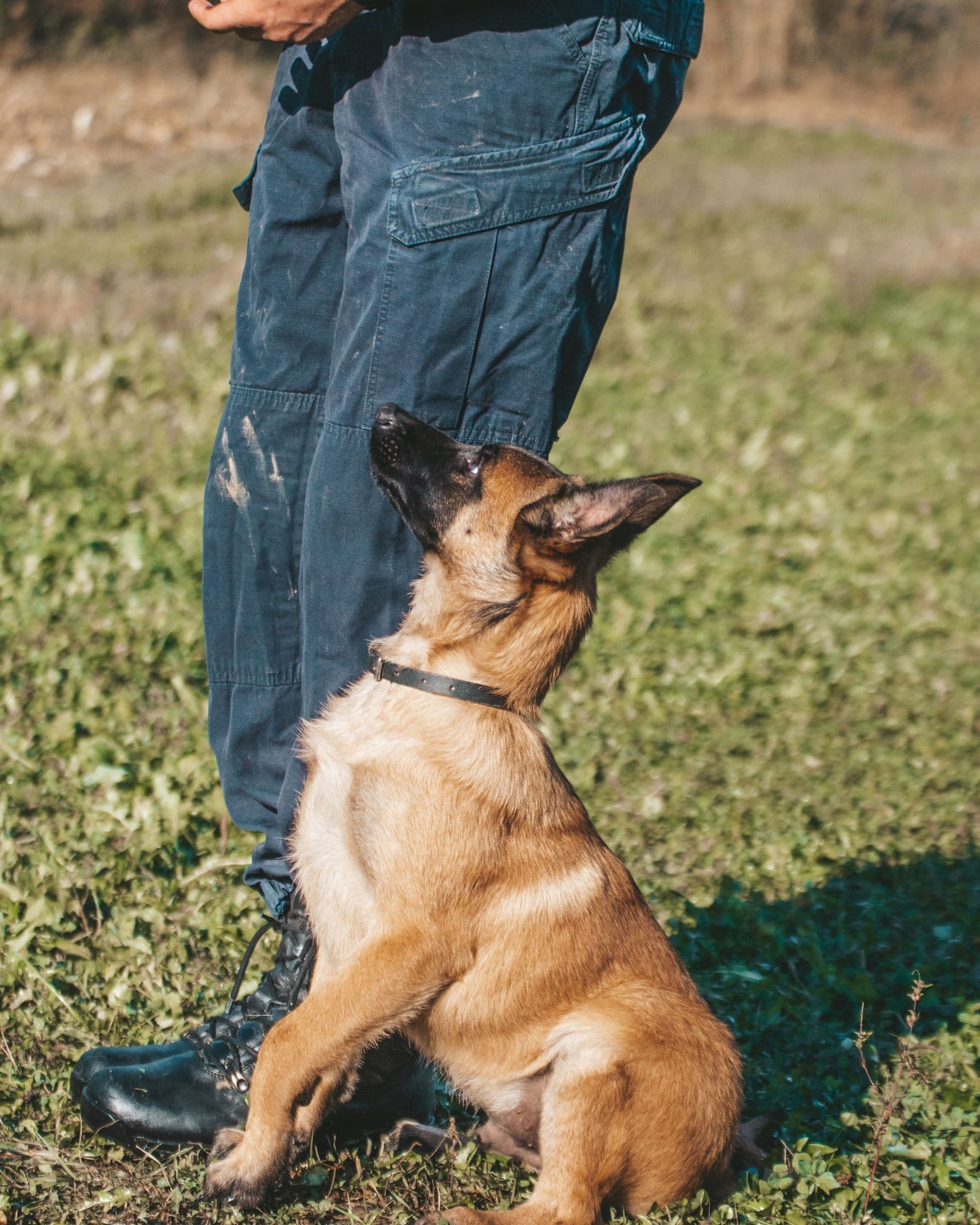
In a puppy's earliest weeks, the brain is learning what reality is.
Not through commands, not through training — through exposure. Every kind of person they meet, every kind of sound they hear, every kind of surface they step on, eventually becomes part of "normal." What they don't encounter in this window will not return with the same ease.
Sixteen weeks. Not more.
Behavioral science points to a window of roughly three to sixteen weeks, during which the puppy's nervous system is particularly open to first impressions. From this age onward, the ability to accept new things without developing fear of them decreases significantly. A puppy that wasn't exposed to children during this period may never feel comfortable around children — even if they later live in the same house.
What belongs in exposure
We are not talking about flooding. Flooding is harm. We are talking about gradual, positive, brief exposure:
- People in hats, glasses, beards, on bicycles, in wheelchairs
- Children of different ages — voices, movements, running
- Surfaces: smooth tile, grass, soil, stone, metal grating, small ramps
- Sounds: vacuum cleaner, doorbell, recorded thunder at low volume, distant motorcycles
- Other dogs — healthy, vaccinated, with mature behavior
- Neutral vet visits, not always ending in a needle
Every exposure should be brief, controlled, ending on a positive note. A puppy that squints, tries to hide, or moves away — is ready to leave the situation. Listening to their body is half the work.
Why this matters in Israel
Israeli public space is a high-stimulation environment. Density, noise, fast contact with other dogs, kids on scooters. A dog that had a controlled first period arrives there knowing how to handle it. A dog who lacks those skills arrives there trying to defend.
Common mistakes in these weeks
- Total isolation "until the second vaccine" — the opposite extreme is also wrong. Exposure is possible through clean human laps, clean hands, and partially-public settings. Total isolation puts a puppy at greater risk than it protects.
- Over-socializing with unfamiliar adult dogs — one hard experience requires weeks of work to repair. Choice of canine companions is critical.
- Correction during exposure — if the puppy is afraid, the approach is not "push them in." The approach is to lower the intensity of the stimulus until they can hold it.
What to do if the window has closed
Most dogs that come to us have passed this window. That is not the end. Change is possible at two, five, and eight years old — it simply takes longer and requires higher precision. Exposure work in an adult dog is called counter-conditioning, and has rules of its own.
But if you're reading this with a ten-week-old puppy in your hands — you are holding particularly precious time.
The first step is a quiet conversation.
Tell us about your dog. We'll design a path from where you are now to where the two of you can be.